Ayaan Jindal
July 20, 2026 · 4 min read
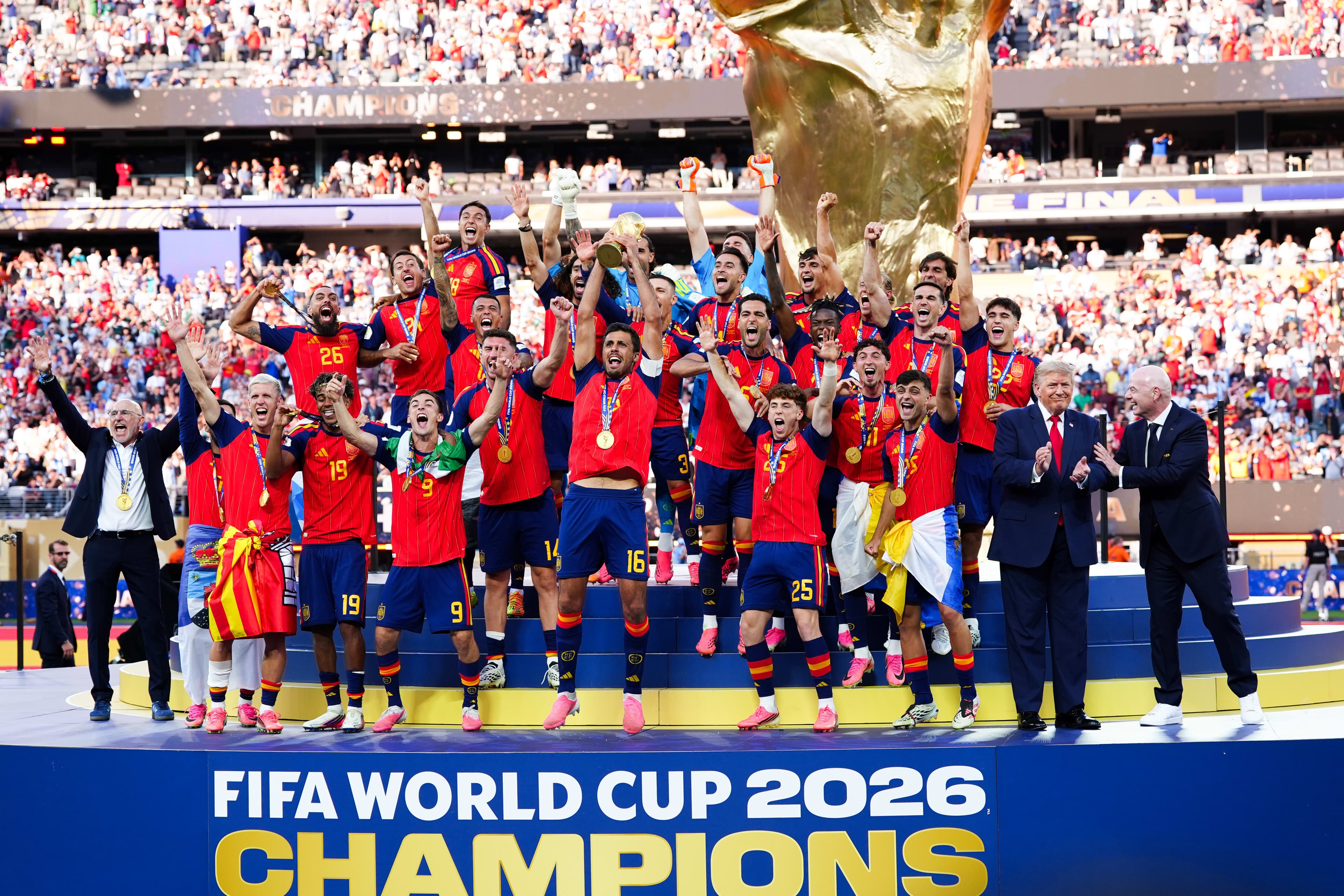
The first edition with 48 teams and 104 matches is about to wrap up, after over a month of events held across the United States, Mexico, and Canada, with a final on July 19 that promises to be a thrilling one. From the packed stadiums throughout the three countries where the matches have been held, to the high figures of profit being posted by FIFA and the large corporations that have partnered with the tournament, it has been a fantastic month for those who love the beautiful game of soccer, despite the figures putting the revenue from the event far in excess of what the host cities and countries actually see.
FIFA's $13 Billion Payday
FIFA is projected to generate roughly $13 billion during its 2023-2026 commercial cycle. The men's World Cup serves as the largest revenue driver for FIFA in the 2023-2026 commercial cycle, alongside the 2023 Women's World Cup and the Club World Cup, which FIFA has recently expanded. Sponsorship revenue is projected to be $2.7 billion, while ticketing and hospitality revenue is expected to triple to $3 billion. While FIFA generates revenue from broadcasting, sponsorships, tickets, hospitality, and merchandise, host cities bear the costs of security, transportation, stadium preparation, and public fan zones, for example.
The Bill Nobody Wanted
The 11 U.S. host cities could face a combined shortfall of up to $250 million, the gap between what hosting costs and what cities have been able to raise through FIFA's local sponsorship program. FIFA had promised that each of the 11 host cities could bring in $25 to $30 million in local sponsorship revenue, coming from 10 separate deals. However, local sponsors have been restricted by FIFA's contract terms, which have already blocked a proposed $5 million deal between the convenience store chain Wawa and Philadelphia. That deal was scuttled because it would have competed with the revenue that McDonald's, an official World Cup sponsor, brings in from selling food at soccer matches. While cities can host the World Cup matches, they cannot necessarily reap the benefits of holding the event.
The U.S. and Canada Look Better on Paper
On the other hand, the U.S. as a whole looks to be bringing in a pretty penny, according to the joint FIFA/World Trade Organization study that put the total economic impact of the World Cup at $30.5 billion in the United States, with $17.2 billion of that contributing to the GDP. But a study conducted by Goldman Sachs examining the economic effects of World Cup tournaments dating back to 1982 found that the long-term impact on economic growth is effectively zero, since most of the revenue from ticket sales, merchandise, and other sources of income is spent outside the host country. As for Canada, the economic boost could be anywhere from C$1.5 billion to C$6.5 billion in incremental quarterly GDP, according to BMO Capital Markets. And according to Canada's Parliamentary Budget Officer, the total government support for hosting the World Cup is approximately C$1.066 billion. C$473 million of that is supplied by the federal government and C$593 million by other government bodies. So, as with the U.S., there will likely be some positive growth on a national scale, but much of that upside will flow to FIFA, event sponsors, and the hotels and restaurants positioned to capture visitor spending.
Mexico's Underwhelming Return
Of course, there is one country where we can now get a clearer picture of the economic impact of the World Cup: Mexico. The country hosted 13 matches across three different venues: Mexico City, Guadalajara, and Monterrey. According to Banamex, the World Cup generated around $2 billion in additional economic activity for Mexico. (That figure represents a paltry 0.1% of the country's total GDP, and is less than half of the roughly $5 billion Mexico receives in remittances every month from its diaspora of workers.) According to Reuters, half of the restaurants surveyed by the news service reported doing worse business in June than they had during an average week. BBVA performed a similar survey of consumer spending, and found that hotel spending fell 10.5% in June, while spending at restaurants declined 4.9%. (Entertainment spending was up, however, by 16.5%.)
The Bottom Line
The World Cup was sold as a spectacle that would bring enormous economic returns to the places hosting it. FIFA has certainly delivered on that promise for itself. But between the projections out of the U.S. and Canada and the early data out of Mexico, the pattern is already clear: local governments take on the costs, while FIFA and its private partners take the clearest wins. If you hear a number like "$13 billion" or "$17.2 billion" tied to an event like this, the real question is never how big the number is. It is whose bank account it landed in.

Discussion
Comments
Loading…
Leave a comment
Be the first to share your thoughts.