Ayaan Jindal
July 27, 2026 · 3 min read
On July 22, Tesla and Alphabet reported earnings after the market closed, and both companies beat revenue expectations. Investors punished them anyway. By the close on July 23, Tesla had fallen 14.5% and Alphabet had fallen 7.1%, erasing hundreds of billions of dollars in combined market value in a single session. The spending, and the pressure it placed on profitability and cash flow, overshadowed the revenue growth.
Beating Estimates Was Not Enough
Tesla's revenue came in at $28.24 billion, above the roughly $27.6 billion Wall Street consensus, and deliveries rose 25% to 480,126 vehicles. But adjusted earnings per share fell 18% to $0.33, badly missing the $0.51 analysts wanted, operating income dropped 57% year over year, and the operating margin narrowed to just 1.4%. Capital expenditures jumped 142% to $5.8 billion as the company poured money into AI, robotics, manufacturing, and infrastructure, pushing quarterly free cash flow to negative $1.1 billion, Tesla's first cash burn in roughly two years.
Alphabet's numbers told a similar story. Revenue hit $119.8 billion, beating estimates, with Google Cloud revenue climbing 82% to $24.8 billion. But the company also raised its 2026 capital spending guidance to $195 billion to $205 billion, more than double the $91.4 billion it spent in 2025, and quarterly capex alone came in at $44.9 billion. That guidance came on top of an already enormous financing commitment: in June, Alphabet announced an $84.75 billion equity capital raise to support its expanding AI and computing infrastructure, anchored by a $10 billion private placement from Berkshire Hathaway. Investors are not worried these companies are struggling. They are worried the AI buildout has no clear finish line and no clear payoff date.
The Company Selling the Shovels Is Thriving
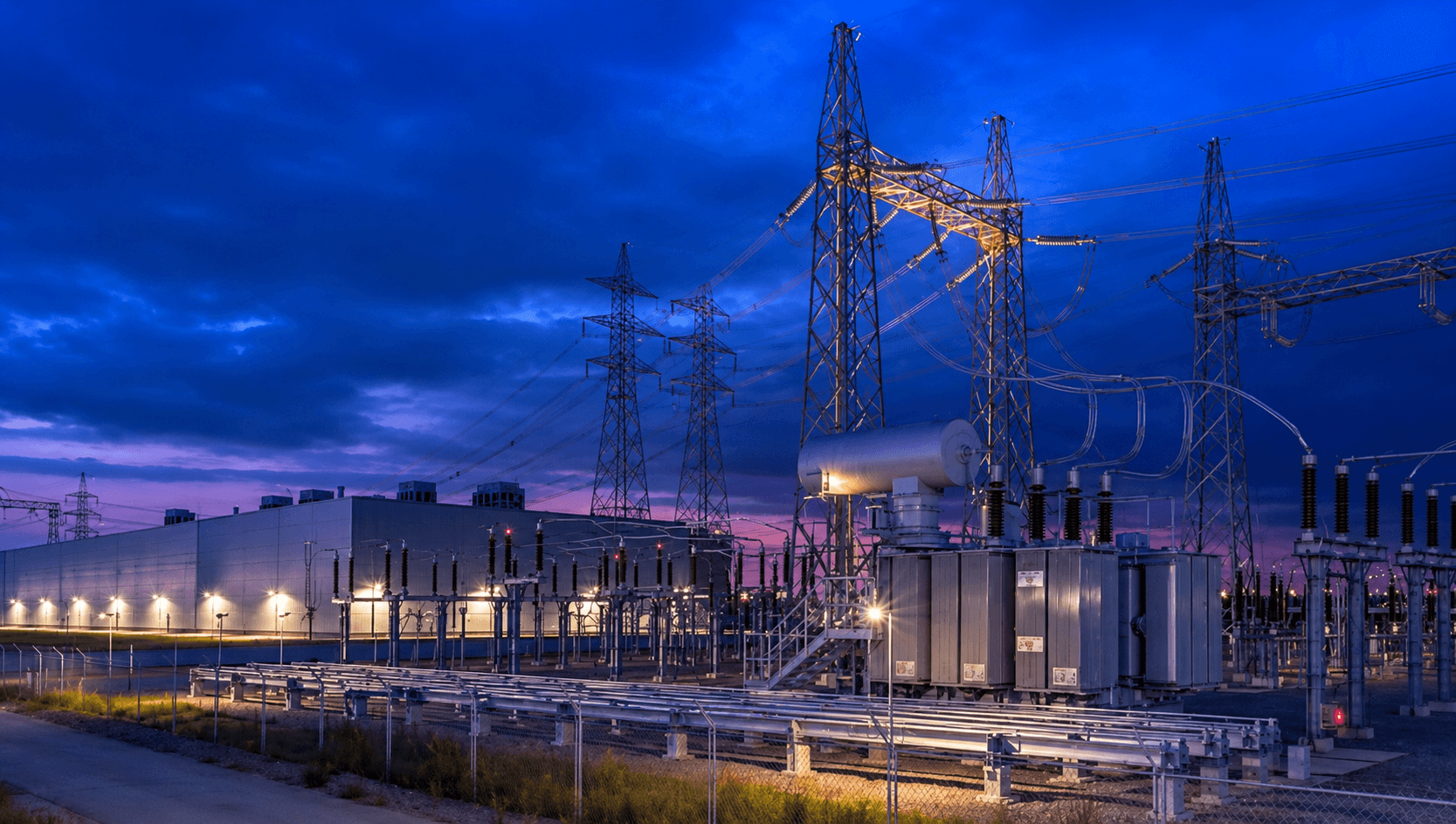
Another AI stock, but a completely different kind of company. GE Vernova makes turbines, transformers, and other grid equipment for power plants, and now powers the data centers of the world's biggest hyperscalers. The company reported orders up 88% to $24.2 billion in the second quarter, and raised its full-year revenue outlook for the second time this year, to $45.5 billion to $46.5 billion. While Tesla and Alphabet reported negative quarterly free cash flow, GE Vernova generated $5.1 billion in free cash in the quarter, more than the $3.7 billion it generated in all of 2025. Data center orders, the physical power equipment GE Vernova makes for hyperscaler facilities, alone have topped $5 billion so far in 2026, more than double the company's total data center orders for all of 2025. So while Alphabet and Tesla's AI capex is an immediate cash outflow, the same dollar of spending flowing to GE Vernova as a supplier is an order, revenue, and, if executed properly, a source of free cash flow.
Why the Market Is Splitting
Moody's forecast of hyperscaler AI capital expenditures, $785 billion in 2026 and nearly $1 trillion in 2027, is a measure of the enormous sum of money, physical space, and power these companies are building out in order to turn their bet on AI into profit for investors. The market is rewarding the companies supplying the hardware behind that bet. The companies placing the bets themselves are not generating comparable returns on their investment in AI, and are getting punished for it instead.
The Bottom Line
The two AI-investing companies did have somewhat of a bad quarter. The fact that the market perceived their spending as excessive apparently outweighed the value of their increased revenue. Only when the builders can demonstrate that their AI revenue outpaces their AI investment will they start receiving the kind of appreciation from Wall Street that the companies selling them the shovels are getting instead.
Discussion
Comments
Loading…
Leave a comment
Be the first to share your thoughts.