Ayaan Jindal
August 3, 2026 · 3 min read
There was little surprise in a decision to keep interest rates on hold at between 3.50% and 3.75% at the Federal Reserve's July meeting, its fifth straight meeting without a change. However, in the vote to keep rates on hold, three members of the committee would have increased the Federal Funds rate by 25 basis points, the first time in nearly a decade that three members had dissented in favor of tighter policy.
A Confusing Press Conference
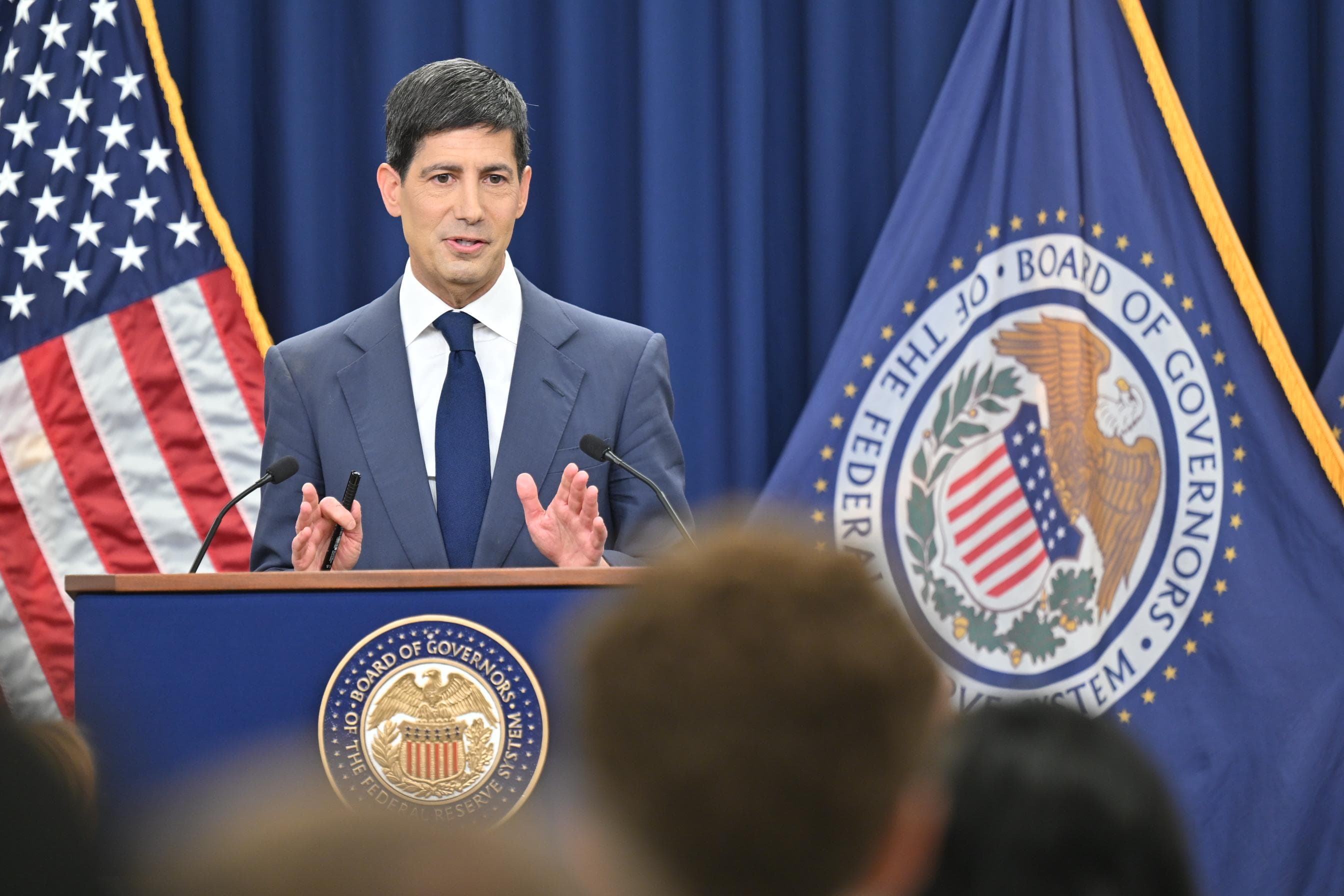
Although the dissent by three Fed officials (Beth Hammack, Neel Kashkari, and Lorie Logan) in favor of raising interest rates by a quarter point would have been enough of a story in itself, Fed Chairman Kevin Warsh, in his subsequent press conference, ensured that the confused message would remain with investors. As it turned out, his prepared remarks to the press were fairly hawkish. Warsh stated in his remarks that "there is no soft inflation target, there is no soft implicit target, not on this Committee's watch." However, after he read his remarks to the press, in answering their subsequent questions, he essentially signaled that the Fed is trying to get an unfiltered message from markets and that officials should simply "observe market reaction to developments, direct and unfiltered."
What the Bond Market Heard
When the Chair of the Federal Reserve conveys conflicting information, the bond market tends to respond quickly, and this time it showed how investors interpreted his message. The 30-year Treasury yield increased to 5.20% in the FRED series, a level not seen since July 2007, while the 2-year Treasury yield decreased to 4.22%.
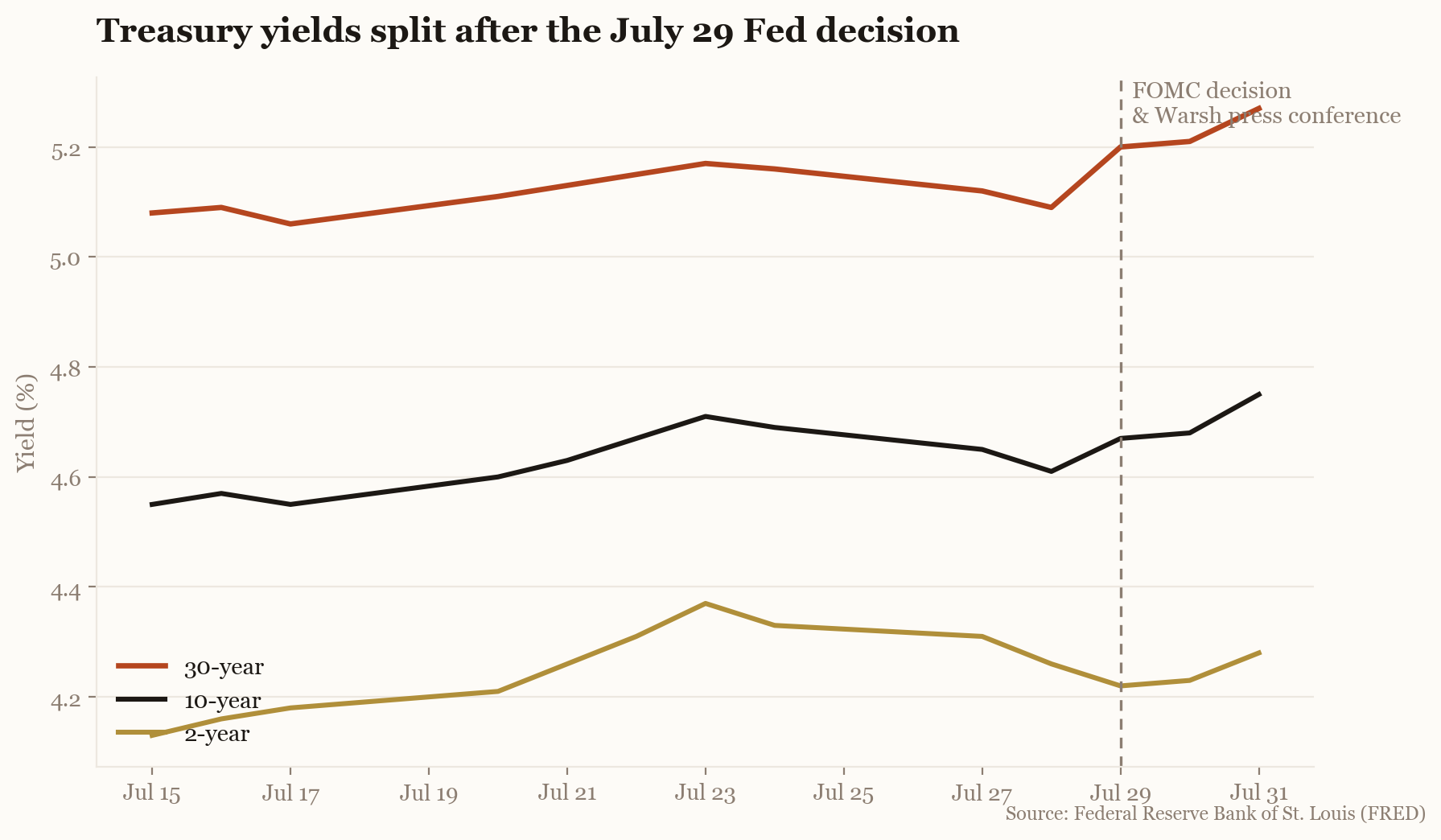
There are several reasons why long-term yields can increase, such as higher term premia, more debt issued by Treasury, and stronger growth expectations, so this split does not necessarily imply a specific cause. Rather, one plausible interpretation is that the decrease in inflation credibility at the central bank is being compensated for by higher returns on long-term debt, while still expecting relief in the short term. In his note, Bank of America economist Aditya Bhave called this event a "central bank inflation credibility shock". He argued that the comments made by Chair Warsh were "so dovish that they will likely force a hawkish outcome" at a future meeting of the FOMC. In other words, his words were so dovish that the market will likely end up being hawkish. In his note, Apollo's Torsten Slok writes "inflation credibility depends not just on the Fed stating its goals but also on it explaining how it plans to reach them."
What Happens Next
Market pricing for a September hike, which had eased in the weeks before the meeting on hopes for a rate cut, jumped to 72.3% immediately after the decision, before falling back to 63.2% the next day. This will continue to be a major focus of investors over the next few months as inflation, which has remained above the 2% Fed target for "something like 63 months" according to Fed Chair Warsh, will become increasingly embedded into prices the longer that the Fed waits to raise rates to reflect that higher inflation environment.
The Bottom Line
The Fed sets interest rates but more importantly sets expectations for future rates. Those expectations immediately translate into today's borrowing costs, today's mortgage rates, and into today's business investment decisions. This week the market gained significant insight into the uncertainty of the Fed's ability to clearly and consistently communicate its future intentions, and every future decision will have to work harder to be believed. That risks weakening the most valuable tool the Fed has: its credibility.

Discussion
Comments
Loading…
Leave a comment
Be the first to share your thoughts.