Ayaan Jindal
September 28, 2026 · 3 min read
The OECD, short for the Organisation for Economic Co-operation and Development, is an international group of mostly wealthy countries that studies the global economy and publishes regular forecasts for how fast countries will grow. On September 23, it released a new one, and it said something that stood out to me. Strong spending on AI is helping the U.S. economy grow, even as regular consumers slow down. The OECD raised its 2026 growth forecast for the U.S. to 2.2%, up from 2.0%. Then the very next day, one giant AI project ran into a problem you might not expect. It was having trouble getting enough electricity.
What the OECD Said
The OECD also raised its 2027 forecast for the U.S., from 1.8% to 2.1%. In the report, it said that U.S. growth reflects "strong AI-related investment somewhat offset by a slowdown in consumer spending and real income growth." In plain English, spending on things like data centers is pushing growth up, while regular people have less extra money to spend. The OECD also said that "continued strong AI-related activity" has helped investment, production, and trade around the world, and it raised its 2026 forecast for the global economy to 2.9%.
So the story is pretty simple. Consumers are slowing down, oil is expensive because of the war in the Middle East, and AI investment is helping make up for it.
How Big Is the AI Spending?
Really big. Back in May, Moody's projected that the biggest U.S. AI spenders would spend about $785 billion on AI infrastructure in 2026 and nearly $1 trillion in 2027. Investors are noticing too. On September 22, the Nasdaq closed at a record high, led by AI-related stocks.
The boom is also starting to show up in debt markets. The OECD said long-term interest rates have risen to their highest levels in 15 years or more in many countries, amid concerns about long-term government finances and "heavy bond issuance by AI-firms."
The Power Problem
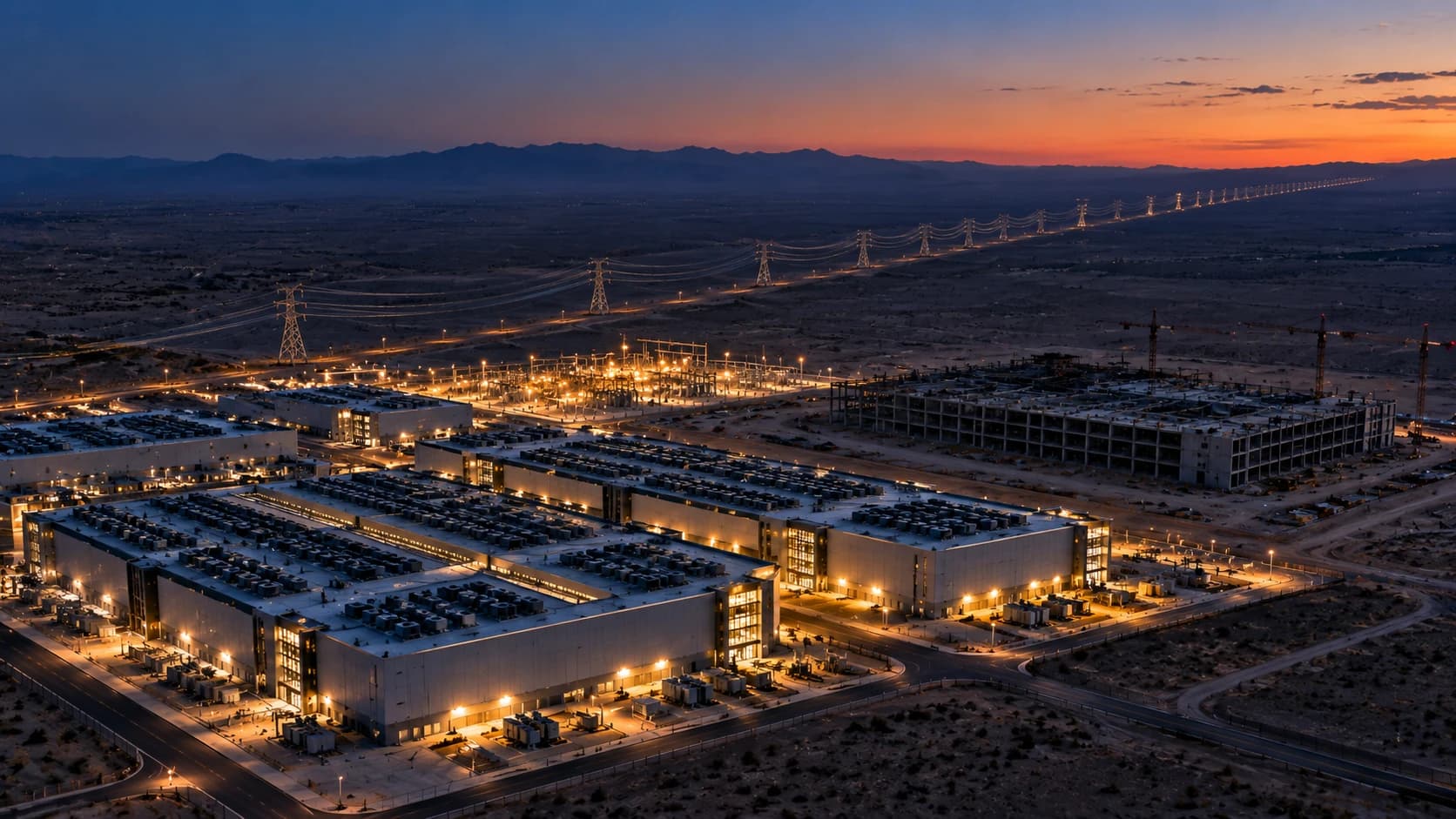
Here's where it gets interesting. On September 24, Bloomberg reported that Oracle sent a "force majeure" notice about a huge New Mexico data center called Project Jupiter. Force majeure is a contract clause that can excuse someone from their obligations when something outside their control goes wrong. In this case, Oracle was trying to delay rent payments to the developer, which is a Blue Owl company, not walk away from the deal.
The problem is electricity. The campus is supposed to produce up to 2.45 gigawatts of power on site. But a gas pipeline it needs was delayed until February because of permit problems, and an air-quality permit decision isn't due until November 23. Oracle said the project "remains on our planned schedule." Blue Owl said the notice "does not change the financial commitments." Still, Oracle's stock fell by more than 3%. And the project is backed by about $18 billion in bank loans, so a delay is not a small thing.
What the Fed Is Saying
Fed officials are also paying attention to AI. On September 21, Chicago Fed President Austan Goolsbee said in London that AI investment could be "spilling out of its own lane" and pushing demand higher than the economy can handle. He added that "if demand overheats, there is no ambiguity about how the Fed needs to respond." In other words, if the AI boom pushes demand too high, the Fed could raise rates again.
A day later, Richmond Fed President Tom Barkin said the economy is "if anything, firming," and that he's hearing "momentum outside of data centers, too," including in defense and manufacturing.
The Bottom Line
AI spending is helping push the economy forward right now, and that is good news for growth. But it also means a lot is riding on one industry. The OECD listed AI investment returns that fall short of expectations as a risk that could weaken growth, though it also said faster AI adoption could lift growth more than expected. The Oracle story shows what the risk can look like in real life: not a crash, just a project waiting on a pipeline and a permit. The question is what happens when one industry's boom becomes important enough to move the whole economy, and then runs into a limit.

Discussion
Comments
Loading…
Leave a comment
Be the first to share your thoughts.