Ayaan Jindal
September 7, 2026 · 3 min read
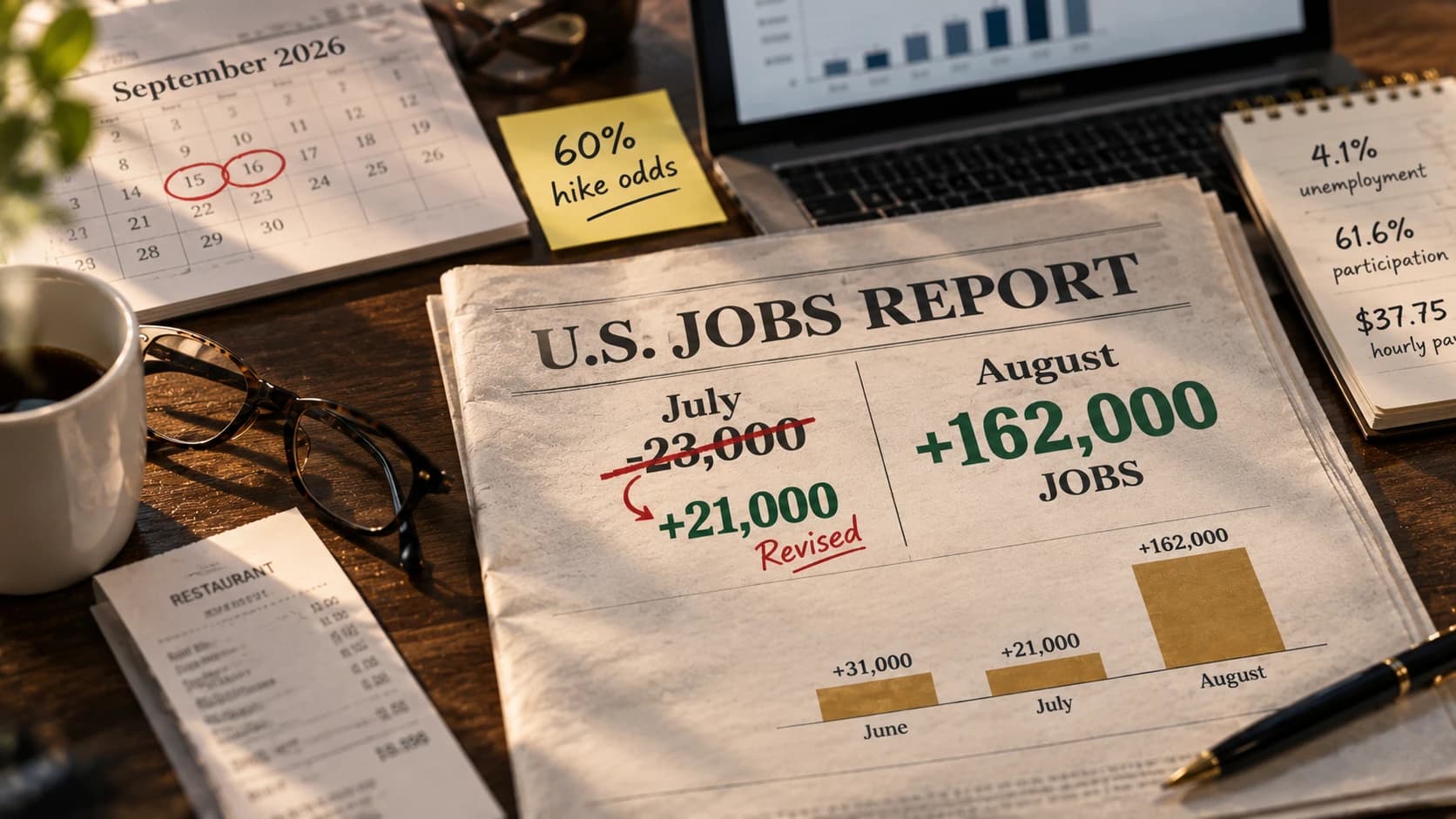
A month ago, I wrote about a jobs report that showed the economy losing 23,000 jobs in July. It was the first drop in payrolls since February, and it looked pretty scary. Then the August report came out on September 4, and it changed the story in two ways. The economy added 162,000 jobs, and the July loss turned into a gain.
August Crushed Expectations
Economists were expecting a small number. Major forecasts were clustered around 53,000 to 56,000 jobs. The actual number was 162,000, roughly three times higher. The unemployment rate stayed at 4.1%, and about 7.0 million people were counted as unemployed.
Most of the hiring came from a few places. Restaurants and bars added 59,000 jobs, which is a big jump for a sector that had averaged gains of only about 12,000 a month over the previous year. Local government education added 42,000. Manufacturing added 16,000 and health care added 13,000. Construction was up 22,000, which BLS described as little changed. The one sector that lost jobs was information, which fell by 23,000.
Pay went up too. Average hourly earnings rose 10 cents, or 0.3%, to $37.75. Over the past year, wages are up 3.1%.
How July Went From a Loss to a Gain
This is the part I think is the most interesting. The government goes back and fixes old numbers every month, and this time the fixes were big. July was revised from a loss of 23,000 jobs to a gain of 21,000 jobs. June was also revised up, from 20,000 jobs to 31,000. Put together, the two months ended up with 55,000 more jobs than first reported.
BLS makes these revisions as more employers and government agencies send in their data and the seasonal adjustments get recalculated. That matters because last month's report had added to worries that the labor market was weakening. Now the official number says July was a small gain. It's a good reminder that the first number you see for the jobs report is really just a first draft.
There were a couple of other good signs too. The labor force participation rate edged up to 61.6%, after falling to 61.4% in July. That means a few more people were either working or looking for work. The number of people stuck in part-time jobs because they couldn't find full-time work also dropped by 414,000, down to 4.4 million.
Why Markets Didn't Celebrate
You might think a strong jobs report would be good news for everyone. But the market treated it a little differently. A strong job market gives the Federal Reserve more room to raise interest rates, and traders noticed. After the report, CME's FedWatch tool showed a 60% chance of a quarter-point rate hike at the Fed's September meeting, up from 49% the day before. That's the "good news is bad news" idea again. When the economy looks stronger, borrowing could get more expensive.
The Bottom Line
A month ago, July's 23,000-job loss looked like a warning sign. Now that same month shows a 21,000-job gain. Nothing about July's economy changed in between. Only our estimate of it did. That's why one jobs report, whether scary or exciting, shouldn't tell us where the economy is headed. The trend over several months matters much more.
Discussion
Comments
Loading…
Leave a comment
Be the first to share your thoughts.